





Elemental Analysis Carbon and sulfur in cement
Elemental analysis for process control, quality & sustainability
Cement and concrete production is one of the most energy-intensive industrial processes worldwide, accounting for approximately 7-8 % of global CO₂ emissions. At the same time, global demand for cement continues to grow, driven by urbanization and infrastructure development. This creates increasing pressure on manufacturers to ensure efficient production, consistent product quality and reduced environmental impact. The production of cement involves several complex process steps, from quarrying and preparation of raw materials to clinker formation at temperatures of around 1450 °C and final grinding. Each stage requires precise control of material composition and process conditions to ensure stable operation and high product performance.
In this context, the accurate determination of carbon and sulfur plays a central role. These elements directly influence raw mix design, kiln efficiency, emission levels and final product properties. Reliable elemental analysis therefore provides the foundation for effective process control, quality assurance and the transition towards more sustainable cement production.

Carbon – Stands for consistency
Carbon in cement production is primarily associated with carbonate minerals such as, for example, limestone (CaCO₃), which form the main raw material for clinker production. Its concentration directly determines the amount of CO₂ released during calcination in the kiln, making it a key parameter for both process control and emission monitoring. From a process perspective, accurate carbon analysis is essential to control the raw mix composition and ensure efficient clinker formation. Deviations in carbonate content can lead to unstable kiln conditions, incomplete reactions or increased energy consumption. In addition, residual carbon in clinkers or alternative fuels may indicate incomplete combustion, which negatively affects process efficiency and emissions. As a result, precise carbon determination is critical not only for maintaining consistent product quality, but also for optimizing energy use and managing the overall CO₂ footprint of cement production.

Sulfur - a minor component with major impact
Sulfur, although typically present in smaller concentrations compared to the main cement oxides, is a highly influential component in cement production. It occurs primarily in the form of sulfates (e.g. gypsum), which are intentionally added to control the setting behavior of cement. At the same time, sulfur introduced via raw materials and fuels plays a critical role in kiln chemistry. Its concentration affects the formation of deposits, the circulation of volatile compounds and the stability of the burning process.
In addition, sulfur contributes to SO₂ emissions and, if not properly controlled, may lead to material degradation in the presence of moisture, as acid is produced. Continuous and accurate sulfur analysis is therefore essential to ensure process stability, product performance and compliance with environmental regulations.

When to determine carbon and sulfur during cement production
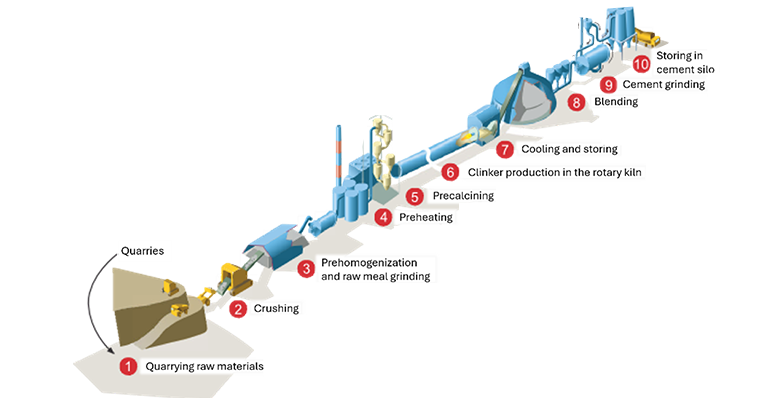
Cement production is a multi-stage process (see figure 1), ranging from raw material extraction to clinker formation and the final grinding of cement. Across these steps, elemental analysis plays a crucial role in ensuring consistent product quality, efficient process control and compliance with environmental requirements.
| Application | Key parameters | Analytical purpose |
|---|---|---|
| Raw materials | C | Raw mix control |
| Clinker | C, S | Kiln stability |
| Cement | C, S, LOI | Quality control |
| Alternative fuels | C, S, H | Energy & emissions |
Overview of applications based on different materials

Figure 2: Raw limestone.
Raw materials such as limestone, clay and additives form the basis of cement production. Their composition directly determines clinker quality and kiln efficiency. The determination of carbon content is essential to control carbonate levels and ensure a stable raw mix. Reliable and precise analysis at this stage helps to avoid process fluctuations and ensures consistent downstream performance.

Figure 3: Clinker before homogenization and grinding to finished cement
Clinker production is the core of the cement manufacturing process and requires tight control of process parameters. Sulfur plays a critical role in kiln operation. Its concentration and circulation influence coating formation, process stability and emission behavior. Continuous monitoring allows operators to prevent operational issues such as build-ups or ring formation. Excessive sulfur content may also lead to the formation of sulfuric acid in the presence of moisture, potentially causing long-term degradation of cementitious materials.

Figure 4: Grinded and finished cement.
In the final product, elemental analysis ensures compliance with specifications and consistent product quality. Carbon and sulfur contribute to the overall composition, especially when additives such as fillers or supplementary materials are used. In addition, parameters such as loss on ignition (LOI), moisture and ash content provide further insight into product characteristics. Reliable analytical data supports quality assurance and helps manufacturers meet regulatory and customer requirements.

Figure 5: Alternative fuels (RDF) derived from shredded household waste.
The increasing use of alternative fuels such as biomass, refuse-derived fuel (RDF), tire-derived fuel (TDF) and waste is a direct result of the high energy demand of cement production. The rotary kiln requires temperatures of up to 1450 °C, making fuel selection and control a critical factor for stable operation. Although these fuels are not part of the final cement product, they have a significant impact on the production process. Their composition influences energy input, combustion behavior and emission levels. Carbon content serves as an important indicator of calorific value, while sulfur directly affects SO₂ emissions and kiln chemistry. Hydrogen also contributes to the effective energy balance through water formation during combustion. Due to their heterogeneous nature, alternative fuels require precise and reliable elemental analysis to ensure consistent process conditions and support the transition towards more sustainable cement production.
Sample preparation and analysis
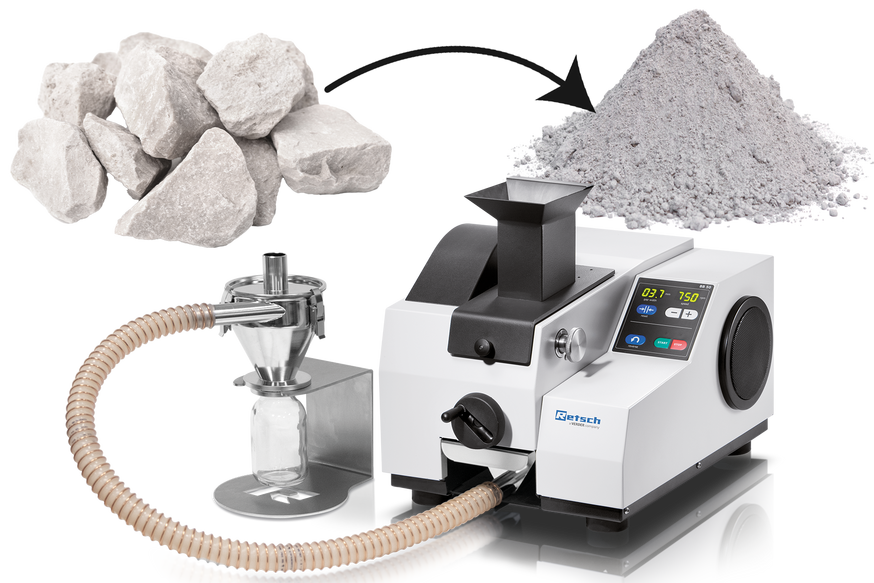
Accurate elemental analysis in the cement industry strongly depends on proper sample preparation. Reliable results require homogeneous samples, especially when working with heterogeneous materials such as alternative fuels or secondary raw materials. Typical preparation steps include pre-crushing, fine grinding and homogenization to achieve suitable particle sizes for analysis. For combustion-based elemental analysis, small sample quantities are typically used ranging from 100-300 mg, making proper homogenization essential to ensure that the analyzed portion is representative of the overall material. This is particularly important for heterogeneous materials, where insufficient homogenization may lead to significant deviations in measured carbon and sulfur content, making it an essential prerequisite for reliable results.
While sample preparation is not part of ELTRA’s core portfolio, it plays a critical role in the overall analytical workflow. Suitable solutions for sample preparation in the cement industry are available, for example, from RETSCH, covering both coarse size reduction and fine grinding of heterogeneous materials.

Making cement more sustainable
The cement industry is undergoing a fundamental transformation towards more sustainable production methods. Roughly 7-8 % of the total CO₂ emission comes from the cement industry, which makes it a significant contributor to global carbon emissions. The expected significant growth in global cement production over the next 35 years highlights the urgent need for more sustainable solutions. Green cement aims to significantly reduce CO₂ emissions by lowering clinker content and incorporating alternative materials such as slag, fly ash or calcined clay, as well as by adopting innovative production technologies. These approaches reduce energy consumption and support circular economic concepts through the use of industrial by-products. One approach, for example, is using alternative cementitious materials that reduce carbon emission but at the same time maintain the high performance. Recent research suggests that limestone calcined clay cement (LC3) represents a promising, economically viable and sustainable approach to lowering emissions in cement manufacturing.
This in turn means that the complexity of material compositions and effort of process control increases. Many supplementary cementitious materials exhibit strong variability, making precise elemental analysis essential to guarantee batch-to-batch consistency not only during the process of cement production but also for incoming materials. In particular, accurate determination of carbon and sulfur is required to ensure product quality and reliable environmental performance.
Elemental analysis also plays a key role in determining CO₂-related parameters and supporting the development of new formulations. As green cement technologies evolve, reliable and reproducible analytical data becomes a critical success factor for both research and industrial implementation.

Making cement more sustainable
The cement industry is undergoing a fundamental transformation towards more sustainable production methods. Roughly 7-8 % of the total CO₂ emission comes from the cement industry, which makes it a significant contributor to global carbon emissions. The expected significant growth in global cement production over the next 35 years highlights the urgent need for more sustainable solutions. Green cement aims to significantly reduce CO₂ emissions by lowering clinker content and incorporating alternative materials such as slag, fly ash or calcined clay, as well as by adopting innovative production technologies. These approaches reduce energy consumption and support circular economic concepts through the use of industrial by-products. One approach, for example, is using alternative cementitious materials that reduce carbon emission but at the same time maintain the high performance. Recent research suggests that limestone calcined clay cement (LC3) represents a promising, economically viable and sustainable approach to lowering emissions in cement manufacturing.
This in turn means that the complexity of material compositions and effort of process control increases. Many supplementary cementitious materials exhibit strong variability, making precise elemental analysis essential to guarantee batch-to-batch consistency not only during the process of cement production but also for incoming materials. In particular, accurate determination of carbon and sulfur is required to ensure product quality and reliable environmental performance.
Elemental analysis also plays a key role in determining CO₂-related parameters and supporting the development of new formulations. As green cement technologies evolve, reliable and reproducible analytical data becomes a critical success factor for both research and industrial implementation.
Analytical method
Cement and related materials are typically analyzed by combustion in an induction or reduction furnace. These methods enable complete decomposition of the sample and accurate detection of carbon and sulfur. In addition, thermogravimetric analysis (TGA) is commonly used to determine loss on ignition (LOI), providing several parameters that reflect the total mass loss from moisture, carbonates and other volatile components. Combustion-based elemental analysis complements XRF techniques widely used in cement plants. While XRF provides oxide composition, it does not directly measure carbon and sulfur, making dedicated combustion analyzers essential for complete and detailed material characterization.
Precise carbon and sulfur determination in cement using ELTRA analyzers
ELTRA’s ELEMENTRAC CS series analyzers are specifically designed to meet the analytical demands of both traditional and modern cement production. They enable precise determination of carbon and sulfur across a wide variety of sample matrices, from fine powders to heterogeneous fuels
Using infrared detector (IR) cells (see figure 6), carbon and sulfur are precisely determined. The analyzers can be equipped with up to 4 IR cells which can be configured according to customer requirements. The longer the cuvette, the more sensitive it is for low concentrations like 10 ppm. For optimum analysis of low and high concentrations, a configuration of two IR cells for one element is recommended. This allows optimal coverage of high concentration ranges within a single analysis. Depending on the sample type and analytical requirements, different furnace technologies offer specific advantages:

The ELEMENTRAC CS-i operates with a powerful induction furnace and melts all kinds of construction materials in a pure oxygen atmosphere at temperatures above 2000 °C. It supports both routine quality control and advanced research applications. The optional autoloader with 36 or 130 positions further enhances efficiency, making it particularly advantageous for high-throughput laboratories. This makes the CS‑i the ideal solution for laboratories requiring highest precision in cement and clinker analysis.
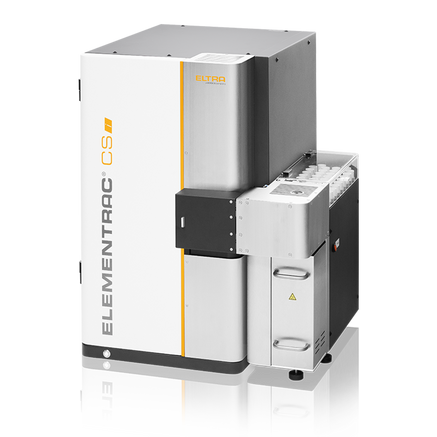
The ELEMENTRAC CS-r operates with a reduction furnace at 1350 °C and offers flexibility and robustness, making it ideal for industrial laboratories that require reliable performance under varying conditions. It is well suited for a process-oriented environment where fast and consistent results are critical. This makes the CS‑r particularly suitable for reliable alternative fuel characterization in cement plants.

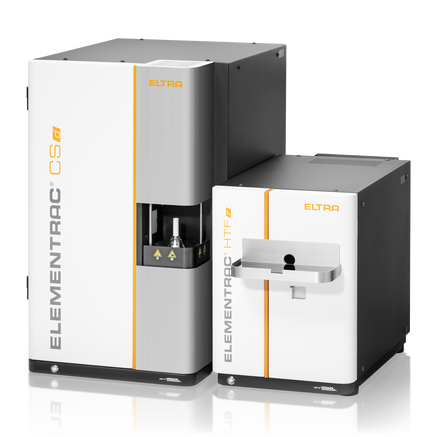
The efficient combination of induction and resistance furnace in one analyzer, ELTRA´s Dual furnace Technology, results in an economical solution for the elemental analysis of carbon and sulfur: the ELEMENTRAC CS-d. The analyzer combines the induction furnace with temperatures up to 2000 °C for analysis of construction materials and the CS-d is also equipped with a resistance furnace, which allows temperatures up to 1550 °C, ideal for analyzing coal, coke or alternative fuels. This makes the CS‑d the ideal choice for laboratories seeking maximum flexibility across a wide range of sample types.
Thermogravimetric analysis (TGA) for the determination of loss on ignition (LOI) provides a valuable complementary method in cement analysis. It is particularly suited for applications where overall material behavior such as moisture, carbonate content and volatile components needs to be assessed. This supports routine quality control and process monitoring, especially when combined with elemental analysis for precise determination of carbon and sulfur.


Your partner in cement analysis
Together, these instruments provide a comprehensive solution for elemental analysis in the cement industry, supporting producers in achieving both operational excellence and sustainability targets. Independent which kind of cement is produced a reliable quality control process is required to assure an economic production process and correct specification of the sold product. ELTRA and other VERDER companies are well established and widely used in the cement market and are an essential part of the quality process. If you have questions about your specific application.
Contact us for a free consultation
ELTRA products and services are available via a global network of daughter companies and fully trained distributors. Our staff will be happy to assist with any inquiry you might have.
Contact us for a free consultation and talk to a product specialist to find the most suitable solution for your application needs

__________________________________________________________________________________________________
References
· CEMBUREAU – Cement and CO₂ emissions; https://cembureau.eu/cement-101/key-facts-figures/
· McKinsey & Company – Cement industry and net-zero transition; https://www.mckinsey.com/industries/engineering-construction-and-building-materials/our-insights/cementing-your-lead-the-cement-industry-in-the-net-zero-transition
· International Energy Agency (IEA) – Cement roadmap; https://www.iea.org/reports/cement
· Scrivener KL, John VM, Gartner EM. Eco-efficient cements: Potential economically viable solutions for a low-CO2 cement-based materials industry. Cement and Concrete Research. 2019; Vol. 114, 2-26. doi: 10.1016/j.cemconres.2018.03.015
· ASTM International – Cement standards; https://www.astm.org/products-services/standards-and-publications/standards/cement-standards.html
· Supplementary Cementitious Materials (SCMs); https://www.sciencedirect.com/topics/engineering/supplementary-cementitious-material
· Hosen K, Chen B. Limestone calcined clay cement (LC3): A review of materials, properties, production and environmental impact. Journal of Building Engineering. 2025; Vol. 12, 113672. doi:10.1016/j.jobe.2025.113672.
· Mañosa J, Calderón A, Salgado-Pizarro R, Maldonado-Alameda A, Chimenos JM. Research evolution of limestone calcined clay cement (LC3), a promising low-carbon binder - A comprehensive overview. Heliyon. 2024 Jan 25;10(3):e25117. doi: 10.1016/j.heliyon.2024.e25117.
· Report “What are green cement and concrete?” from Alo Hasanbeigi and Adam Sibal. 2023. Link: https://static1.squarespace.com/static/5877e86f9de4bb8bce72105c/t/657e7271bfb98b64707ed71f/1702785721176/Green+cement+and+concrete-R8.pdf